I sat down with Melbourne-based writer (and good friend) Charles O’Grady last month to talk writing, ‘rona, and his pop culture mega-brain.
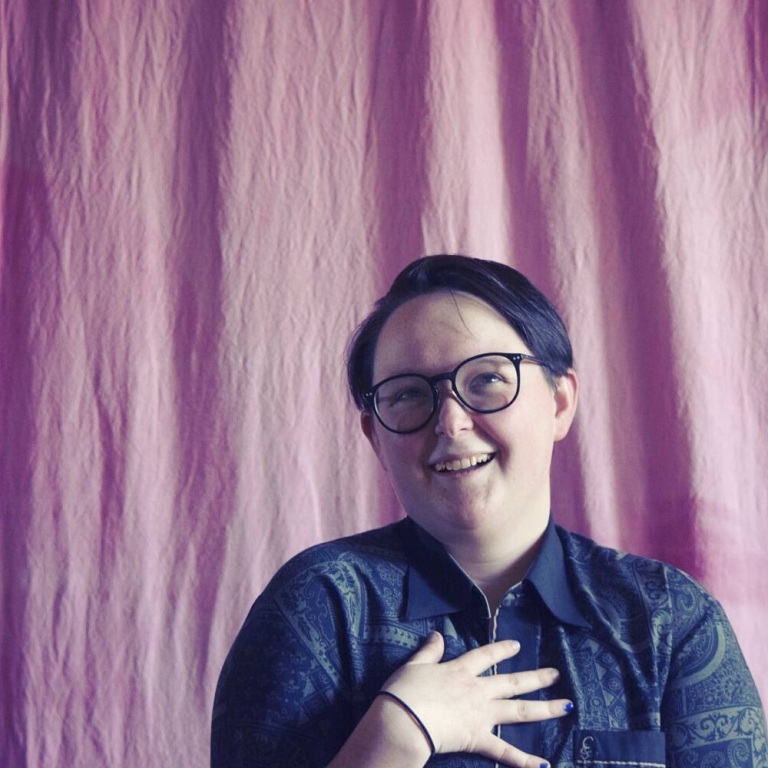
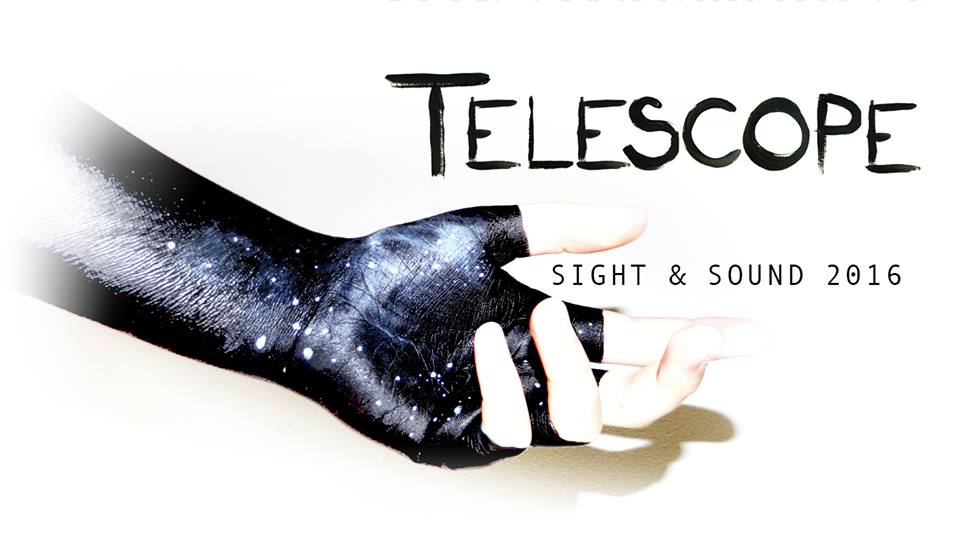
Charles O’Grady’s is a writer of many talents. He is the author of three original plays–Kaleidoscope (2015), Telescope (2016), and Are We Awake? (2017)–a contributor to many devised works and major productions, including Still Point Turning: The Catherine McGregor Story (Sydney Theatre Company, 2018), Hir (Belvoir Street Theatre, 2017), and The Homosexuals (Malthouse/Griffin, 2017). His work is simultaneously poetic and grounded, hilarious and heartfelt. It delves deep into the inner psychology of its’ characters and picks apart their relationships, hopes, and desires, exploring gender, masculinity, and love. He’s also one half (along with Tansy Gardam) of Pitch Shift, a writing/pop culture podcast that’s having a bit of beauty sleep.
I met Charlie (as I know him) at university. He’s since moved on to greener pastures in Melbourne, but we don’t hold it against him, and I’d still call him one of my closest friends. Instead of writing one of my typical profiles, I sat down with him to have a chin wag about his writing, podcasting, working during a pandemic, and the place of trans and gender diverse people in Australian theatre today.
To what extent is it harder to be a writer—yourself primarily of theatre—in July 2021 than July 2019?
Ummn… Yes. Yeah, no, it is. It’s an interesting question because the ways in which it’s harder are not the ways I would have expected. Obviously it’s expected because the main thing I do is an artform that requires an audience to be all together in the same room, all breathing at the same time, in and around each other’s faces. That’s often not an option at the moment. I think the assumption tends to be that writers are inherently a bit reclusive, and if you’re working on something you’ll shut in for a little while, and not be social while you’re working on writing. Everyone at the beginning of last year was like, “Oh, Shakespeare wrote King Lear during a pandemic, you could do this, you could write a novel!” And a lot of people did. But I found as it went on, the fact that I wasn’t seeing people and getting external stimulation I found that I can’t write about anything. I don’t know about anything. Nothing’s happened. What am I going to write about?
To me it seems to be the people who produce various texts as part of their day job, who get on social media and publicly underestimate the importance to the writing process of going to the pub and bitching about the writing process.
And to talk about anything that isn’t writing, really. It’s the same as the issue I’ve had with a lot of—I mean, I’ve not been to drama school, I’ve not done a playwriting course, so I’m talking a little bit out of my arse–the issue I’ve found with a lot of people who go and do an intensive writing program is that they’ll come out with a body of work, or a major work, that’s writing about writing. Writing about creating. Because all they’ve done for a whole year is think about writing, talk about writing, do writing. I’ve found that increasingly for me I need other stuff. I need to be consuming other content and learning other things, but also just be around other people. I’ve not become a more social person, but I’ve realised just how much of a social person I am. You do that reset of: “Oh, I’m not a writer in my ivory tower. Actually, that sucks.” You need to be somewhere with people, to do things, and have experiences. Who knew?
So much of your body of work concerns itself with living, and various experiences of being The Other, looking at disabled bodies or gender. Could you imagine writing about the pandemic one day? Are you going to do your Coronavirus Play?
In general I watch a lot of horror. And I watched a lot of horror last year. In all of the media that I’ve consumed adjacent to or about the pandemic, the one thing that I’ve found that has worked is when it’s turned into some kind of horror element—whether it’s zombies or some sort of demon that’s invading people or whatever—and that becomes a metaphor for what everyone is experiencing. So that’s the kind of thing that I’m interested in generally. I’m interested in using genre as a metaphor to look at grounded experiences, because whether or not they’re universal experiences you can use them. We’re all scared of ghosts, right? And what if it turns out that the ghost is a metaphor for… being gay? Like… [laughter] That’s not a thing I’ve actually done! But that provides people with a point of contact.
My first play—which then became a very different play as time went on—Kaleidoscope, is now a time-travel comedy that uses the idea of “what if there’s you, and then there’s a future-you and a past-you that you see reflected in your mirror, and you can converse with that idea of your former or your future self?” That becomes a hook for people, for them to understand what it’s like to not feel connected to the way that you look, or to have been a fundamentally different person in the past to what you are now, and to reconcile those ideas. Writing specifically about being in “The Covid” is fundamentally uninteresting because it’s not doing anything that people aren’t experiencing right now. You want it to be relatable but you don’t want it to be like “this movie is literally what I’m currently doing while I’m watching this movie. You’re not telling me anything new.”
There was a horror film made via Zoom called Host which came out last year and that’s drawing on the the fact that yes, we all know what it’s like to have drinks with the gang via Zoom–but what if also you summoned a demon? So, the short answer is yes: I think you can, and I think I probably will end up writing stuff that is about or around Covid or about pandemics in general and the experiences of isolation, and that “everything is trying to kill you” that Covid has introduced to people’s everyday lives. Unless of course you were already living with anxiety, in which case you’re like “oh, everything was already trying to kill me.” Everything actually is now!
Yeah, quite. I really loved that shift in Kaleidoscope. I saw it quite early on—
I think you might’ve seen all the iterations of it.
It just got better and better. It became so universal in the sense that, of course you look back on your past, and you can’t recognise that person.
That’s instead of expecting people to say, “ah yes, now I truly understand ‘The Tran’.” I think the first iteration of Kaleidoscope was that, which is also what it needed to be in 2015 in a Sydney-theatre-context, which was like: “Trans? Wh-huh-what? Hmmn?” Also, in that period of my life as a writer it needed to be about how I make what this is understandable to people who aren’t me. Over the years it got to a point where (a) I didn’t care as much about people needing to understand what it was like to be me and (b) audiences are pretty smart and they will go where you take them as long as you give them a hook. You can do that by introducing something like: what if your mirror was a time portal?
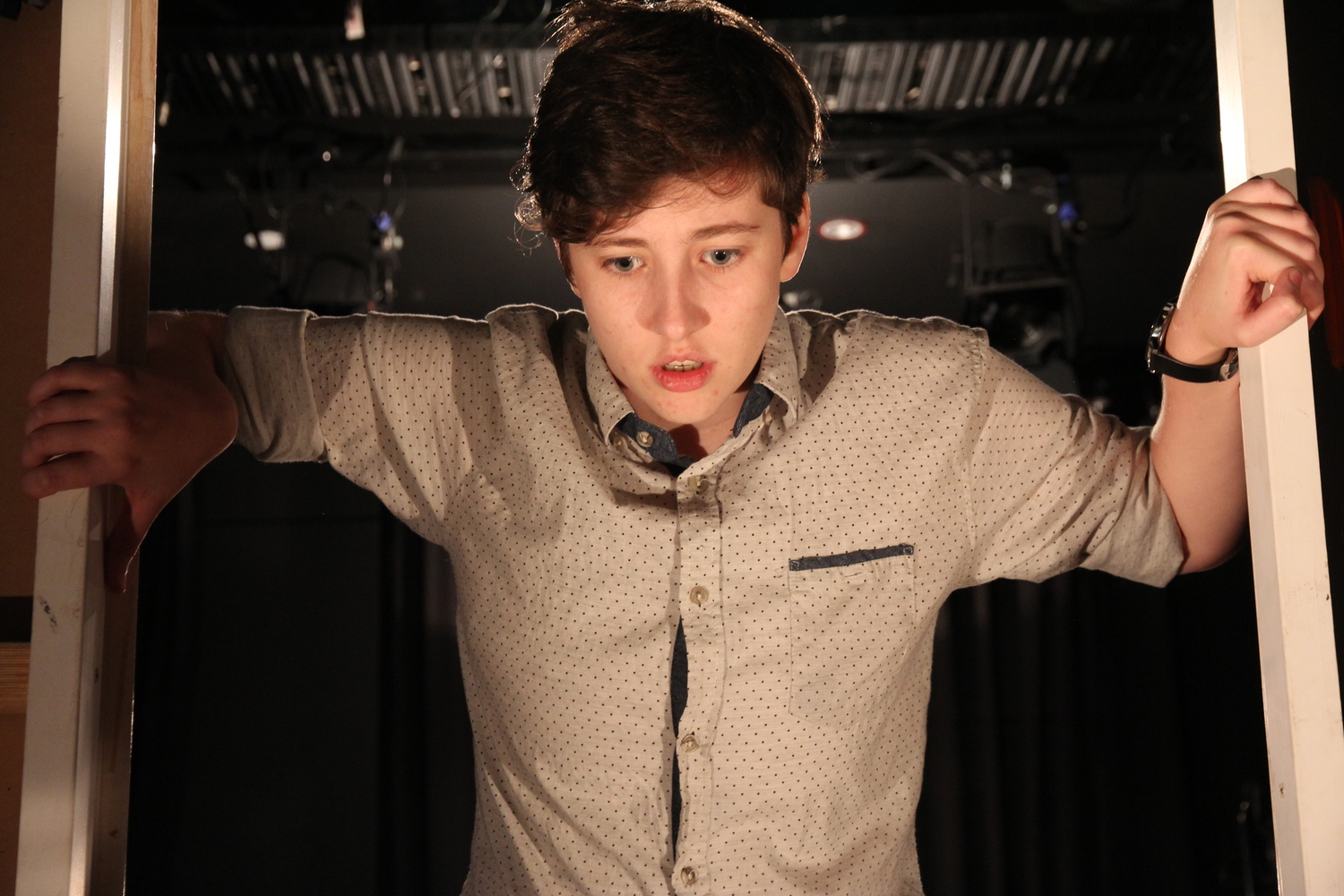
Do you think there were things that could’ve been done differently to support theatre in Australia during the pandemic period, or has the inevitable unfolded?
I think there are certain aspects that have been inevitable. Obviously I think theatre and the arts are very important, but in the specific situation of a global pandemic, I think that of the people who have a right to complain about barriers to their careers… it’s OK to chill for a little bit. It’s still a problem that a whole bunch of people have no way to make money now, but, well… we’re not paramedics.
Obviously I think that the government wanting to give more money to theatre would always be a good thing, inside and outside of a pandemic. One of the things that people tried to do early on which has petered out as it’s gone on, is finding new ways to make digital theatre or performance work. Griffin [Theatre Company] did an amazing program that was all digital, filmed and put out live safety. It was trying to find new ways to bring the live theatre experience to people in their homes. To a certain extent you’re never going to be able to capture the sense of actors being physically there, being able to reach out and poke them, but there was a lot of interesting stuff happening trying to make digital theatre more interactive. Trying to explore what you can do when you’re broadcasting from alone in a room that you can’t do when you’ve got a live audience in. Putting more money, more effort, more creativity into things like that I think would be a good thing. It also means that when/if we ever reach a point where we’re not in this, it then means you’ve got new tools at your disposal to make theatre generally more accessible. People with disabilities, people with other accessibility issues, people who live in rural areas, as well as people who don’t make enough money to go see theatre regularly, have never been able to go to a physical theatre and see a physical performance. Going beyond things like National Theatre live performances can only be a net good for everyone going forward.
As a writer you’ve often drawn on your experiences of being trans. As we’ve previously touched on, it was a new thing (for some) in 2015 to encounter trans people or trans stories. Has interest in stories from trans people steadily increased, or have we seen a kind of boom/bust cycle?
I think it goes through cycles. Trans stories or stories about gender identities are still in the background, not quite there. The industry, and the hegemonic powers that tend to be in charge of most theatre companies—as well as in charge of what gets made into films, what books get published—tends towards “now maybe we should go for this identity, and then maybe we should go for that identity.” The unintentional—or maybe intentional, I don’t know—side effect is to sometimes make it seem like they’re pitting identities against each other. Which is the spiciest identity, or which is the one that will get dinged if we don’t have this year forming our season or announcing the next sixteen Marvel movies, or whatever. There’s an element of cynicism—that I sense—coming from the “industry” in telling minority stories.
Definitely in the last six, seven years that I’ve been participating in theatre and the conversation around it, there definitely has been a noticeable increase in the exposure of both trans stories and trans and gender-diverse artists get. The difference between me starting out in indie theatre in 2015 and having to look for Australian-theatre-trans-storytelling forebears, and there not being anyone who’s been elevated by the system, and having to find my own mentors and people to look up to as well as finding what the trans Australian theatre voice is for myself, and comparing that to three years later. I’d worked on The Homosexuals (Griffin 2017), Hir (Belvoir 2017), both of which had key trans characters, the latter written by a queer trans playwright, and having trans people in trans roles wherever possible. And then in 2018 getting to work on Still Point Turning: The Catherine McGregor Story (Sydney Theatre Company), which is still the biggest Australian mainstage production of a new work about trans people. Which is a small “first” to give it! I feel like I put a lot of limiters on, but that was in itself a big step. It has been a linear progression. But we haven’t hit that point that’s been talked about since 2013, the “trans tipping point”, which I think just turned out to mean “now we know who Laverne Cox is.” There hasn’t been a point where it has become an integral point of how we perceive Australian theatre and Australian storytelling. It’s still not quite there. But we’re getting there.
There’s also that thing where Australian theatre has so many other shortcomings, so many other things it has to work on in terms of representation of women, Indigenous artists. I have to refuse to see it as identities being made to compete with each other for space. They shouldn’t have to. Space should be made for everyone.
Not every one of your plays has been about “I’m trans, consume me”—
I’m Trans, Consume Me is actually the title of my next play.
Do you find that you’re able to tell other stories with as much attention paid to you as you deserve, or do you find that you’re treated as Charles O’Grady, trans-queer writer to be called on for trans-queer things?
Yeah, look, that’s still a pigeonhole that I’m trying—I feel like I have to consistently fight to stay out of that pigeon hole. As a writer you can write about whatever you want, it’s just a question as to whether someone will give you money to do it. That’s where that question comes in, as well as the creeping insecurity that people only like me because I do the trans thing. It’s a little bit of both. I’m fortunate to have a whole bunch of people that I can collaborate with on projects that don’t have anything to do with gender—that are informed by a trans-queer dramaturgy but aren’t necessarily like “we need your trans take!”
I worked with Ange Collins and Eliza Oliver on Project Bestfriendship (2019). It had some trans characters in it but it was an opportunity for all three of us to write something that we didn’t think had been seen in Australian theatre up until that point. I’m working with someone at the moment on a theoretical play about QAnon. So I do have that freedom through the people I collaborate with.
I do sometimes go into a meeting with a major theatre company—I’m not going to name any names—and you’ll have that conversation of what are you interested in me, what can we potentially work on together, and you get in reply: “We see this as an opportunity for you to tell your trans story.” To which my response is often: “I already did that. A couple times, actually.” No one ever means ill by it, no one ever means anything cynical by it, it’s very much just we want you to be able to tell your story, and that’s a gesture towards promoting trans artists. But then I’ll have an idea sort of like, “What if there was a trans woman…who became the Judeo-Christian God?”—which is a play I’ve been working on for a little bit—and the reply is, “Yeah, that’s sort of not about gender… but sure…” I’ve had that conversation with theatre companies, trying to clarify if when they say they want me to tell my trans story, they mean they want trans content from me or… You have to be like, “hey, just upfront, you don’t want me here just so you can check a box?” And they’ll deny that, but then say that they want a play with just one nuanced trans character. So you do want me to tick a box! Which, you know, ticking a box can be an in.
I don’t want to sound that I feel like I’m above “just” writing trans stories, because I don’t think I am, and that’s still a very important thing. It just so happens that a lot of the things I’m interested in right now—of course are still informed by that bedrock of a non-cis-normative perspective and a non-binary perspective that all my work comes from—but I’m interested in taking that bedrock and looking at something that doesn’t explicitly have anything to do with trans stories.
You’re hyper-literate in pop culture, more so than anyone I’ve met, as demonstrated in your podcast project Pitch Shift [with writer/producer Tansy Gardam]. Do you find that there’s a nexus between that knowledge and your writing?
Definitely. Partly because the more stuff that you watch, the more content you consume, the more you learn about storytelling and good stories. Particularly last year: I watched a lot of movies last year because there was nothing else to do. That obviously feeds into things like Pitch Shift which is basically Tansy and I doing an exercise in “How would I tell this kind of story? How would I make this kind of movie?’ Flexing those storytelling muscles.
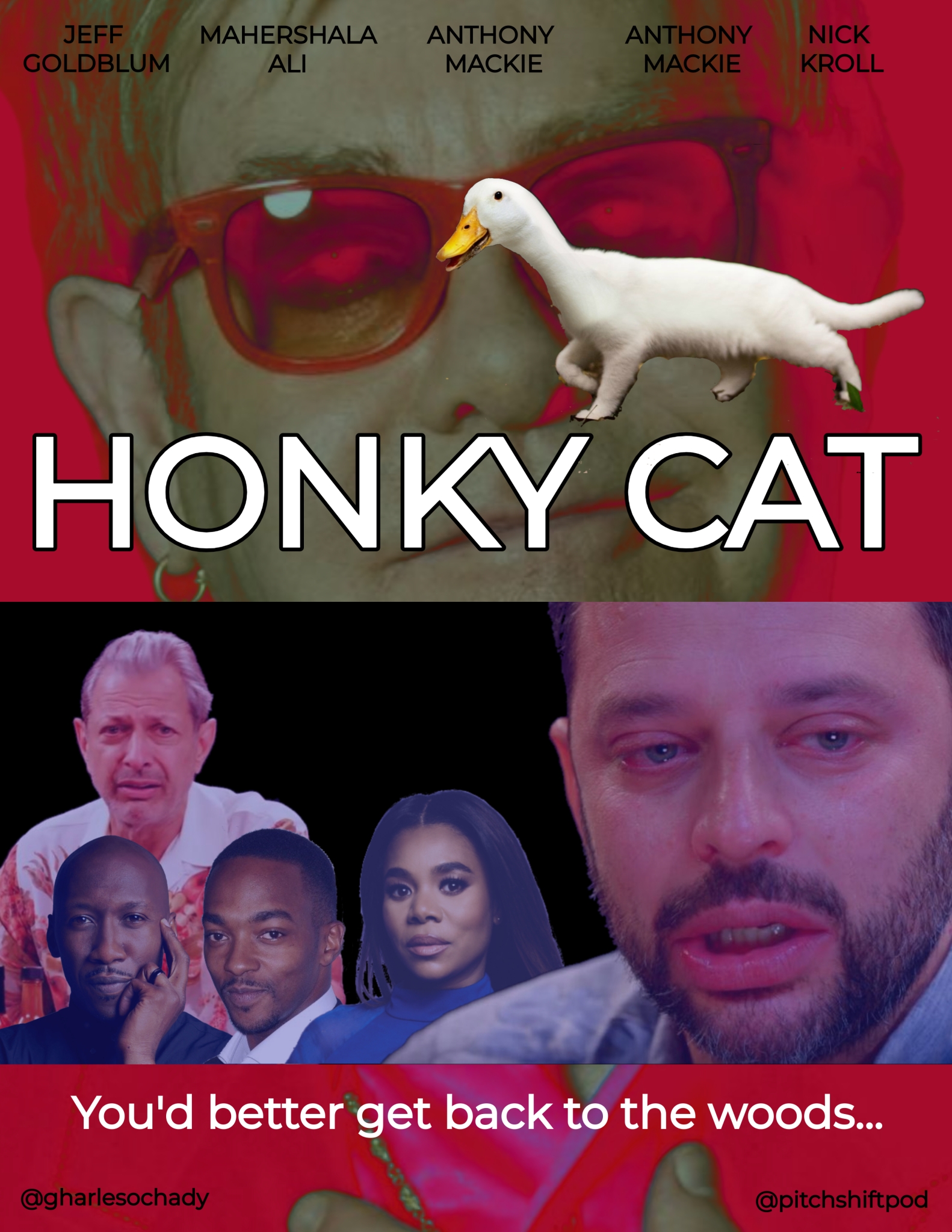
Pop culture informs my writing in theatre. There are a lot of writers that talk about wanting their writing to be “timeless” and not wanting it to be too culturally or temporally specific so it can be universal. I’ve never found that to be a particularly interesting way to write. I find a sense of immediacy is a more interesting way for me to go when I am writing. I find it easier to tap into a character’s voice when it is a voice of now, or of the recent past, or of a specific period of time. I find that you end up with richer character voices that way, if your characters are speaking in the language of what’s going on right now, whether that’s in terms of slang or in cultural references the characters make.
In Kaleidoscope, for example, names of clubs Gabe talks about going to, it felt important that those references were current in each rewrite. I had the conversation with dramaturgs I was working with at the time, asking if I wanted to make it less specific, so that it can be performed ten years from now or in a different place. And that always… obviously I want my work to have a sense of longevity, but with my work I feel that if it’s still relevant enough piece with relevant enough things to say about the state of current life in ten years’ time, then society’s kind of fucked it. If we’re still at the point where people still have to hear what this has to say about the world, then I don’t know if society would’ve done its’ job. So I’m kind of OK with feeling dated. It should feel dated in ten years’ time say, politically, because in ten years’ time we should have progressed past needing to hear this.
Also, I like to make Simpsons references.
What are you working on at the moment?
An ongoing sort-of non-fiction project which may be prose or a podcast series about trans representation in horror. You know, in the Venn diagram of me, it’s a circle. Tansy and I have some screenwriting projects that we’re tossing back and forth at the moment. I guess the theatre one that I’m still coming back to is The O’Gradys, which is a show I did a reading of right before shutdown with Melbourne Theatre Company. That’s a trans farce about a trans gay man who has to pretend to be his own wife. The character’s name is Charles O’Grady. It’s based on me in name only, et cetera et cetera. That’s the big one that I would like to see on a stage. It’s one of those things I think would be a thing people want to see… a silly play about crossdressing but it’s not problematic. Imagine!
Charles can be found on his website, his Twitter, and his Instagram. Check out Pitch Shift–a podcast he hosts and produces with Tansy Gardam–wherever you stream podcasts. You might even come across some songs suggested by yours’ truly.
 definitely something.